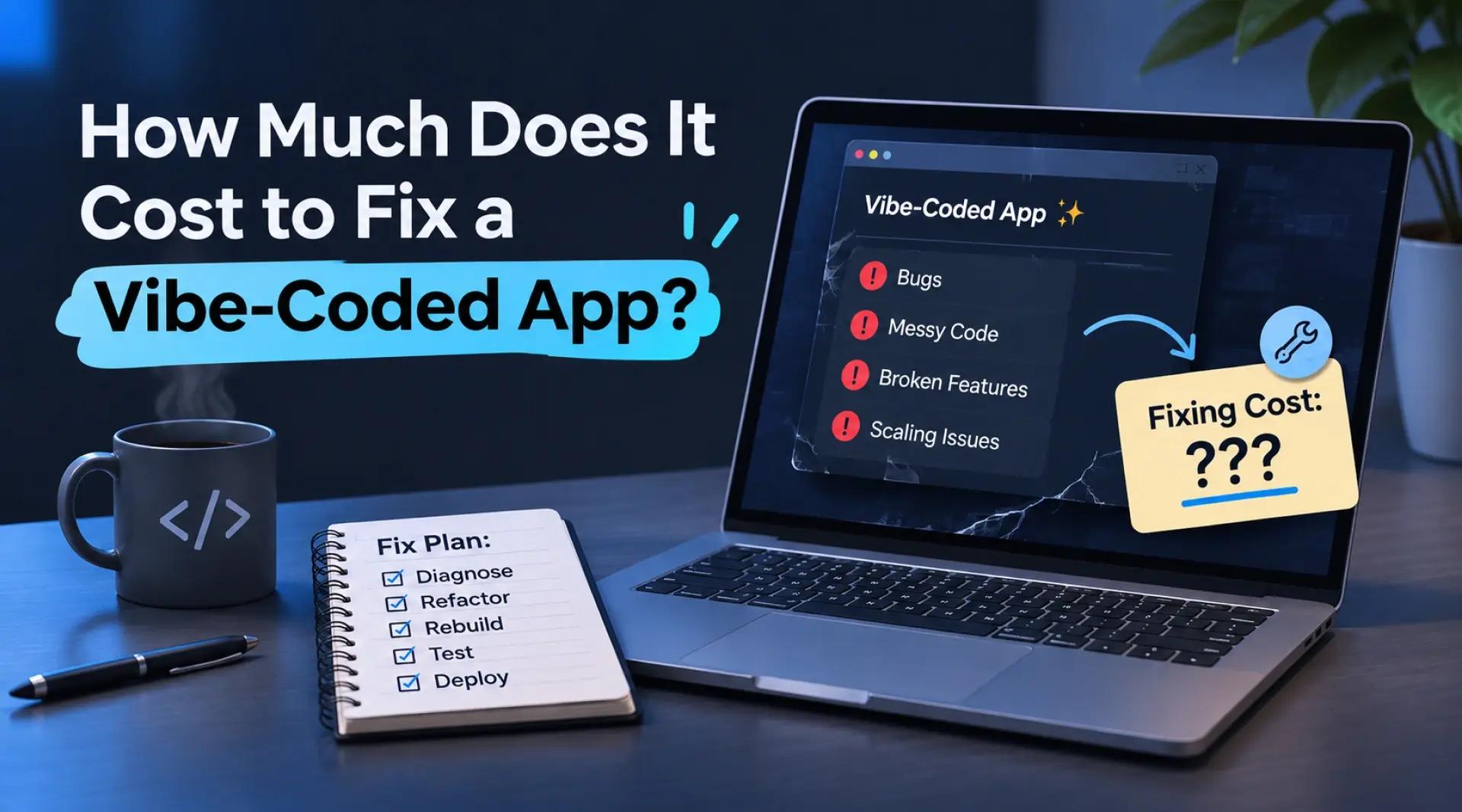
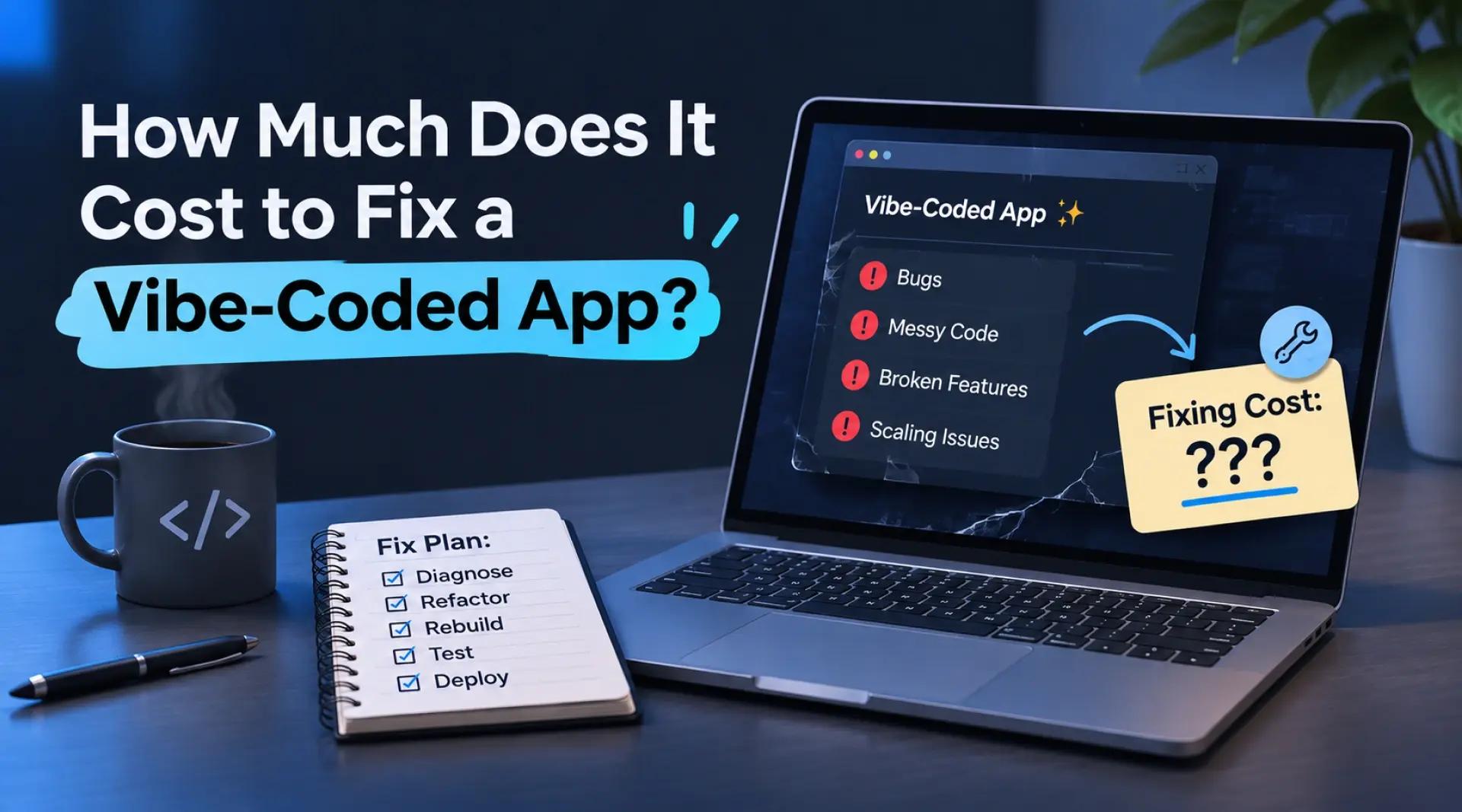
How Much Does It Cost to Fix a Vibe-Coded App?
Fixing a vibe-coded app costs $499 for one bug to $2,499 for a full rescue. See what drives vibe code cleanup cost and how to get a fixed price.
Fixing a vibe-coded app usually costs anywhere from a few hundred dollars for one focused bug to a few thousand dollars for a full launch-ready rescue. At Bitrupt, a Quick Rescue is $499 fixed and a Full Vibe Code Rescue is $2,499 fixed. The honest answer for your app depends on what is actually inside the code, and nobody knows that until someone looks. Explore Bitrupt’s software services
TL;DR
- Fixing a vibe-coded app (built with Lovable, Bolt, Replit, Cursor, v0, Supabase, etc.) typically costs a few hundred dollars for one focused bug up to a few thousand for a full launch-ready rescue. The exact figure depends on what’s actually in the code, so any trustworthy price requires someone to look at it first.
Why apps look “90% done” but aren’t: AI builders handle visible features well but struggle with security, data rules, payments, and deployment. Common issues include Stripe webhooks failing in production, random logouts, loose database rules (or exposed keys), deployment failures, endless AI fix loops, duplicated code, and unfinished integrations.
What drives cost: The platform matters less than the scope of the problem, data model complexity, payment setup, code bloat, environment readiness, and whether you want just a fix or a fix plus new features.
Your options: - Keep prompting: cheap, but risks loops and hidden security issues
- Cheap freelancer: fine for one isolated bug, but often no testing or handover
- Hourly agency: total cost unknown until the end, and you carry the risk
- Fixed-price scoped fix: budget certainty, though scope must be agreed first
Bitrupt’s pricing:
- Quick Rescue: $499 fixed, one focused issue, 7-day warranty
- Full Vibe Code Rescue: $2,499 fixed, up to 40 engineering hours, 14-day warranty
- Complex Rescue: custom quote for rebuilds or migrations
Scope and price are confirmed in writing within 1 business day, a human engineer fixes it and QA tests it, and you get clean Git commits plus a plain-English handover. They promise no unnecessary rebuilds and re-fix anything their work breaks within scope.
Before asking for a quote: describe what’s broken and what should happen, record the bug, note where it fails, list the services involved, know where your code lives, check for a staging environment, and define what “done” means. Never share API keys or passwords in forms or chat.
Table of Contents
- How much to fix my Lovable app?
- How much does it cost to vibe code an app in the first place?
- Why your app looks 90% done but isn’t
- What drives the cost of fixing a vibe-coded app
- How we price a vibe code rescue at Bitrupt
- Vibe code rescue packages and prices
- Two promises that matter more than the price
- Fix my vibe coded app: what to prepare before you ask for a quote
- Start your Vibe Code Rescue
How much to fix my Lovable app?
We get this question almost every week, from founders building on Lovable, Bolt, Replit, Cursor, v0 and Supabase.
Most of them got surprisingly far on their own. The screens work, the demo looks great, and early users are signing up. Then they hit something prompting can’t solve. Payments fail in production. Users get logged out at random. The AI loops on the same error for the tenth time.
So they search “fix my vibe coded app”, ask for a price, and get hourly quotes back, which means the real number only shows up at the end.
This guide explains what drives the vibe code cleanup cost, what your options are, and how to get a price you can trust before anyone touches your code.
How much does it cost to vibe code an app in the first place?
This is the other half of the question, and it is why the fix bill surprises people. Building with an AI app builder is cheap and fast: you pay for a subscription and builder credits, and you can have a working demo in days. The cost of fixing a vibe-coded app comes later, because AI builders handle what you can see well and what you can’t see poorly. A cheap build can hide an expensive launch, so budget for a cleanup pass before real users and real money arrive.
Why your app looks 90% done but isn’t
AI builders are very good at the parts you can see. They are much weaker at the parts you can’t: security, data rules, payments and deployment. That gap is where the cost of a fix lives.
These are the problems we see most often when founders bring us an AI-built app:
- Payments that only work in test mode. Stripe checkout succeeds, but the webhook never updates the user’s plan in production, so paying customers stay on the free tier.
- Auth lockouts and dropped sessions. Supabase or Clerk sessions expire at random, password reset links point to localhost, or users get stuck in a login loop.
- Database rules nobody checked. Row Level Security is off or too loose, so one user can read another user’s data. Sometimes a service-role key sits in the frontend code.
- Deployment failures. The app runs in the builder’s preview but breaks on Vercel, Netlify or a custom domain because of build errors or missing environment variables.
- The AI fix loop. Every prompt fixes one thing and breaks another. After a few rounds, nobody knows which version of the code is the right one.
- Duplicated code. The same function is generated in four places, each slightly different, so a fix in one place doesn’t fix the bug.
- Integrations the AI can’t finish. Third-party APIs, webhooks and SDKs need real debugging, not another prompt.
None of these show up in a demo. All of them show up the day real users and real money arrive.
What drives the cost of fixing a vibe-coded app
The platform you built on matters less than you’d think. A Lovable app and a Bolt app with the same problems cost about the same to fix. What moves the price is the shape of the app and what you want at the end.
Two founders can describe their problem with the same sentence, “Stripe isn’t working”, and need very different amounts of work. One needs a webhook secret corrected. The other needs the subscription logic rebuilt because plan data lives in three tables that disagree.
That is why any honest price starts with someone looking at the actual code and setup.
| Cost driver | Lower cost | Higher cost |
|---|---|---|
| Scope of the problem | One focused bug, such as a broken webhook | Several connected issues across auth, data and payments |
| Data model | A few tables, one user type | Many tables, several roles and permission levels |
| Payments | None, or one simple plan | Multiple plans, subscriptions, usage billing, webhooks |
| Generated code | Small, mostly clean codebase | Large codebase with heavy duplication from repeated prompting |
| Environment | Repo access and a working staging setup | No staging, secrets scattered, unclear which version is live |
| Goal | Fix it and keep running | Fix it, harden it for launch and add new features |
Your options for a vibe code cleanup, and what each really costs
There are four common ways founders try to fix an AI-built app. Each has a place.
| Option | What you pay | Good for | Watch out for |
|---|---|---|---|
| Keep prompting yourself | Your time and builder credits | Small UI changes and copy fixes | Loops that break working features; security issues you can't see |
| Cheap freelancer or gig | Low upfront price | One clearly defined, isolated bug | Patches without context, no testing, no handover notes |
| Agency billed hourly | An hourly rate times however long it takes | Large, open-ended work with a long relationship | The total is only known at the end, and every unknown lands on your bill |
| Scoped fix at a fixed price | One agreed number before work starts | Founders who need it fixed and need to budget | Scope has to be agreed in writing first, which takes a day |
The problem with hourly quotes for AI-built apps
Hourly billing is fair when both sides understand the codebase. With AI-generated code, nobody does yet. The developer is discovering the problems as they go, and so is the clock.
That puts all the risk of the unknown on you. If the Stripe bug turns out to be connected to an auth bug, which turns out to be connected to a database rule, the bill grows at every step.
A fixed price works the other way. The unknowns get turned into a written list first. The list becomes a scope. The scope gets a price. If the work takes longer than expected, that is the developer's problem, not yours.
How we price a vibe code rescue at Bitrupt
We don't bill vibe-code rescues by the hour. You get a confirmed price in writing before any work starts, and you aren't charged until you've seen it.
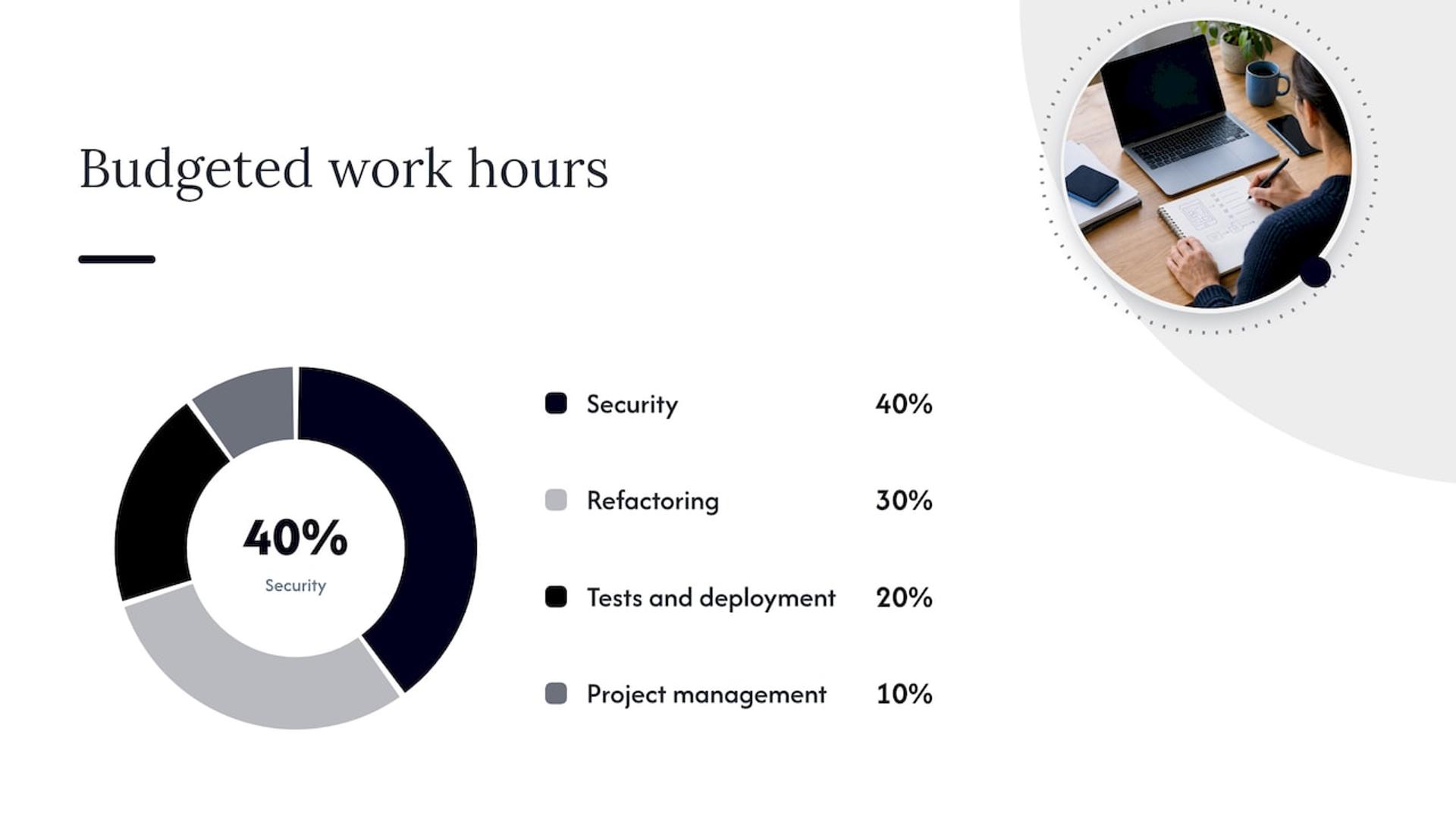
- Tell us what's broken. Fill in a short intake form, or start with a free Rescue Check if you're not sure what you need. Tell us what you built, what it's built with and where you're stuck. No sales call required.
- We confirm scope within 1 business day. You get the scope and price in writing. If we need to inspect the code first, we offer a paid technical assessment that's credited toward the rescue.
- A developer fixes it, and QA tests it. A human engineer works in your repo. Our QA team checks the fix before it comes back to you.
- Handover. You get a working app, a plain-English summary of what changed, and clean Git commits with handover notes.
Vibe code rescue packages and prices
| Package | Price | What's included | Warranty |
|---|---|---|---|
| Quick Rescue | $499 fixed | One app, one focused technical issue (auth, payments, database, API, deployment or state bugs) | 7 days |
| Full Vibe Code Rescue | $2,499 fixed | One agreed rescue objective, up to 40 engineering hours, deployment to your existing environment, technical handover | 14 days |
| Complex Rescue | Custom quote | Partial rebuilds, backend or database migrations, multiple objectives | Agreed per project |
Prices exclude VAT. For a Full Rescue, the objective is agreed in writing before work starts and the price doesn't change.
Two promises that matter more than the price
No surprise rebuild. We keep the code that works. We don't recommend a rewrite just because an AI wrote it.
Fix warranty. If our fix breaks again within the agreed scope because of our work, we fix it again. New requirements, unrelated bugs and later changes by someone else aren't covered.
Our Perspective
We see the same pattern again and again. A founder builds something real in a weekend, users show up, and then the first security question, the first data bug or the first outage lands on someone with no way to answer it.
Our position is simple: the prototype is an asset, not a mistake. It proves demand, and that is the hardest part. What it needs is senior engineering attention to turn it into software you can trust.
That is why we staff vibe-code work with senior engineers only. Reading someone else’s generated code, deciding what to keep and finding the one flaw that matters takes judgment, not just speed. It is also why we respond within 24 hours and give you direct access to the people making technical decisions.
We start with an assessment and a ranked plan, so you choose how far to go. Some clients take the minimum safe path and keep building. Others bring us in for a development pod or staff augmentation to carry the product forward.
Farhan
Fix my vibe coded app: what to prepare before you ask for a quote
A few minutes of prep gets you a faster, more accurate price from any developer, us included.
- Write one sentence on what’s broken and one on what should happen instead.
- Record a short Loom or screen recording of the bug happening.
- Note where it fails: only in production, only for some users, or everywhere.
- List the services involved: Supabase, Stripe, Clerk, Vercel, and so on.
- Know where your code lives: GitHub repo, builder export, or only inside the builder.
- Check whether you have a staging or test environment separate from live.
- Decide what “done” means: fixed and stable, or fixed plus new features.
You can see how we work on the vibe coding services page. If you are weighing a larger build instead, our guide to what an app costs to make and our AI cost calculator help you frame a budget.
Get a fixed price to fix your vibe-coded app
You got surprisingly far with AI. If you've hit the wall where prompting stops working, tell us what's broken and we'll confirm a price in writing within one business day.
→ Start your Vibe Code Rescue
It ranges from a few hundred dollars for one focused bug to a few thousand for a full launch-ready rescue. At Bitrupt, a Quick Rescue is $499 fixed and a Full Vibe Code Rescue is $2,499 fixed.
It depends on scope, data model, payments, how much duplicated code the AI generated, and whether you want a fix only or a fix plus new features. A fixed price agreed in writing removes the guesswork.
Usually not. Most AI-built apps have a solid base with specific broken areas. We keep what works and fix what doesn’t. A rebuild only makes sense when the core data model is wrong, and we’d tell you that in writing before you pay for anything.
Lovable, Bolt, Replit, Cursor, Claude Code, v0 and Supabase-based apps, plus the usual stack around them: Stripe, Clerk, NextAuth, Prisma, PostgreSQL, Vercel, Netlify and Docker.
Yes. You get clean commits and a plain-English summary of what changed, so you or your AI tool can keep going from a stable base.
Yes, an NDA can be provided upon request.
Within 1 business day of submitting the intake form or Rescue Check.